The question the evidence can answer
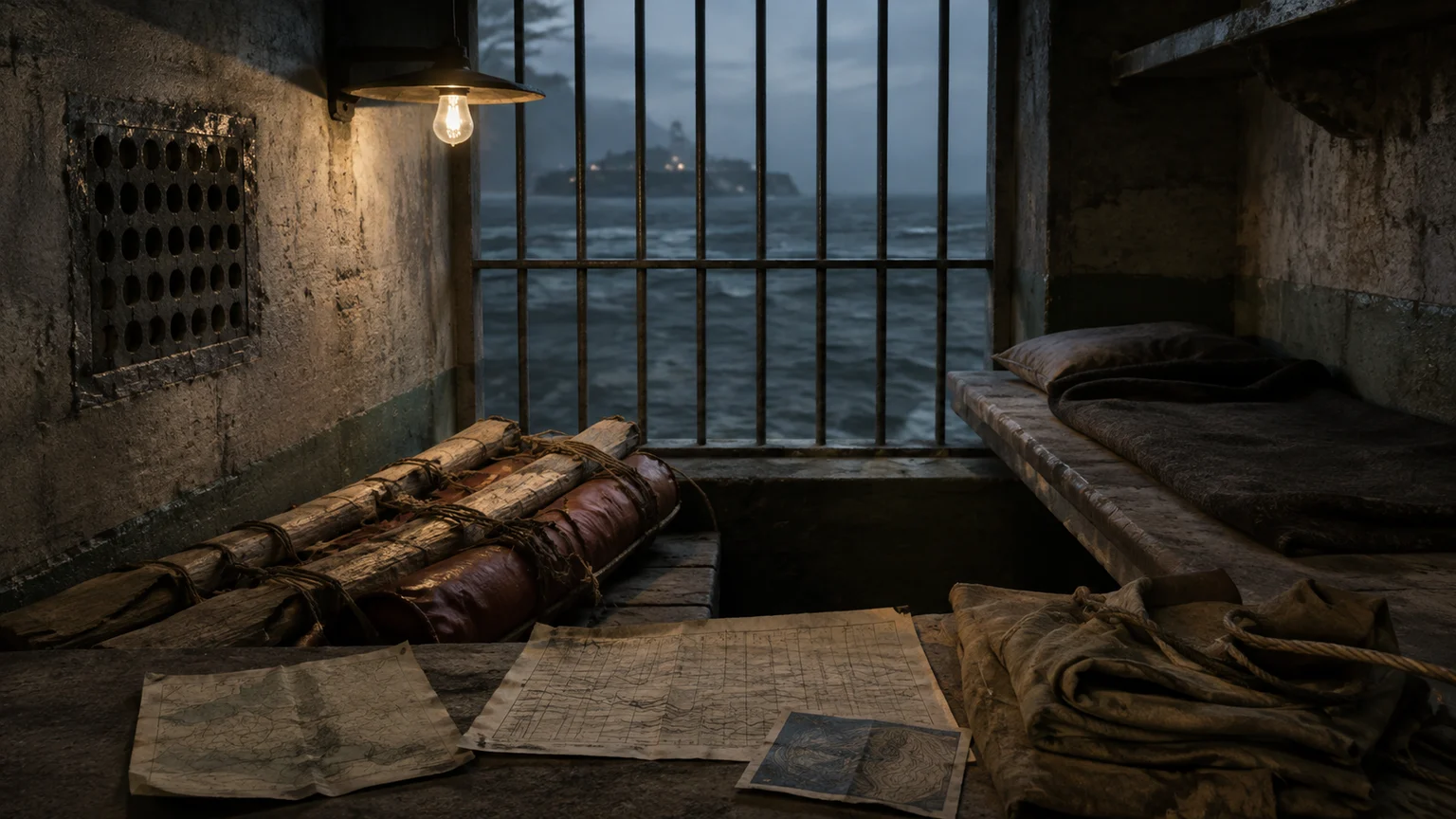
Frank Morris and brothers John and Clarence Anglin escaped their cells at Alcatraz on the night of June 11, 1962. The absence was discovered at the June 12 morning count, when guards found dummy heads in their beds. Investigators reconstructed a route through enlarged ventilation openings, an unguarded utility corridor, a workshop above the cellblock and a roof ventilator. The men reached the island’s northeast shore with a raft and life preservers made from raincoats. That physical escape is verified. Their survival after launching into San Francisco Bay has never been established.
Sources: Federal Bureau of Investigation · FBI Vault
Building an escape inside the cellblock
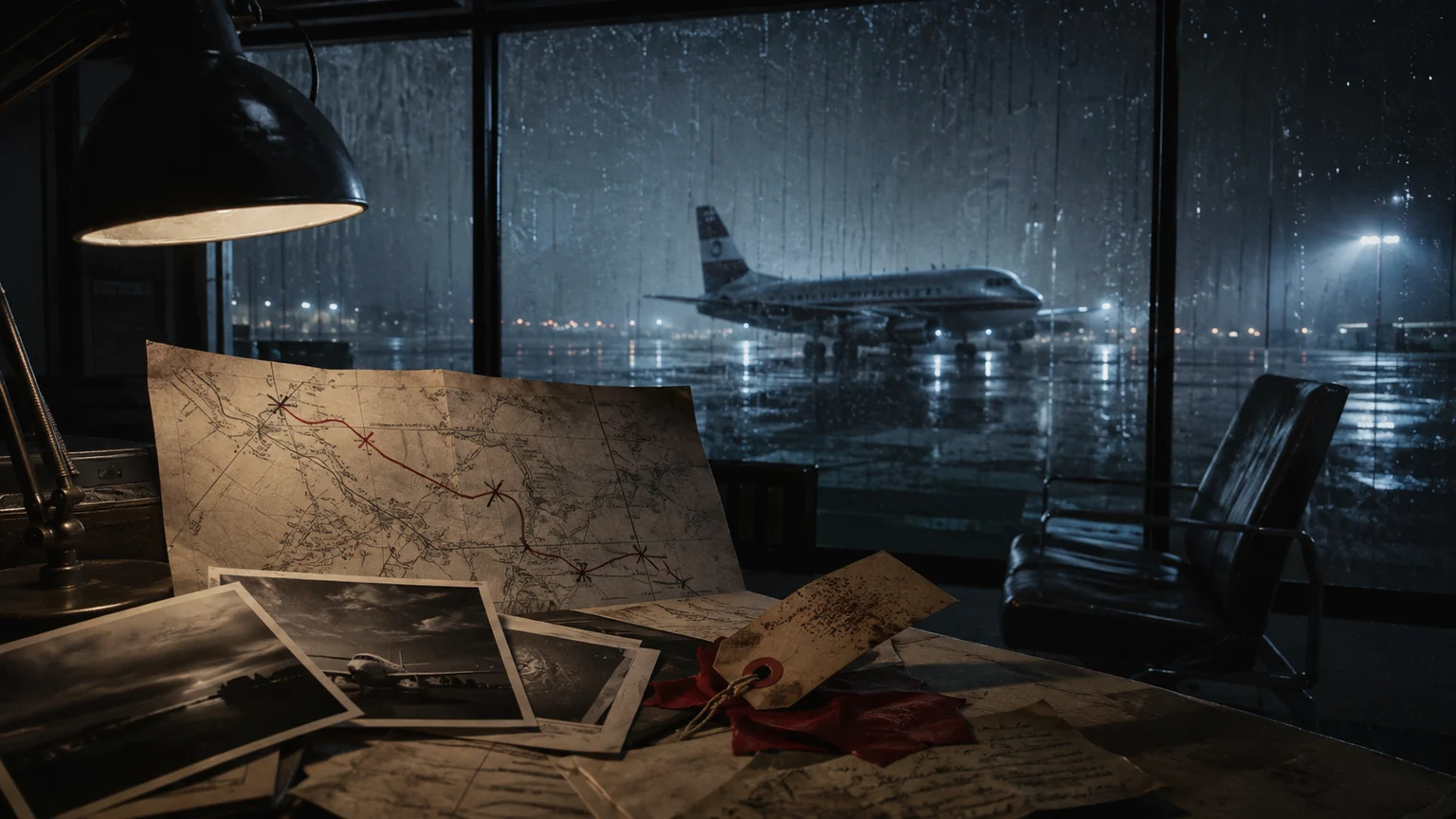
The plan developed over months with another prisoner, Allen West, who failed to get out of his cell in time. The group loosened ventilation grilles with crude tools, including a drill assembled from a vacuum-cleaner motor, and hid the openings. In the concealed workshop they stitched and heat-sealed more than fifty raincoats into flotation equipment, made paddles and adapted a musical instrument to inflate the raft. The dummy heads used plaster, paint and real hair. These objects are not movie embellishments; photographs and descriptions appear in the FBI history and case files.
Sources: Federal Bureau of Investigation · FBI Vault
The night of June 11
On the final night, Morris and the Anglin brothers moved into the corridor, collected their equipment, climbed through the roof opening, descended outside the cell house and crossed to the shoreline. West remained behind and later helped investigators reconstruct the preparation. The launch is the last part of the plan the official history can describe with confidence. Currents, cold water, darkness and an improvised raft shaped the risks beyond that point. A plausible route to Angel Island existed, but a possible route is not proof that a specific raft completed it.
Sources: Federal Bureau of Investigation · FBI Vault
What washed ashore
Searchers recovered a rubber-sealed packet of letters, pieces of wood resembling paddles, bits of inner tube and a homemade life vest on Cronkhite Beach. A paddle appeared on Angel Island. Those findings confirm elements of the equipment and suggest how the bay dispersed material, but they do not supply bodies or a verified landing. The FBI also looked for expected activity on land, including stolen clothing or a vehicle, without finding evidence it considered credible. Negative evidence can lower a theory’s probability; it cannot show exactly where each man died.
Sources: Federal Bureau of Investigation · FBI Vault
Survival claims and the official handoff
The FBI investigated for seventeen years and closed its active case on December 31, 1979, transferring continuing fugitive responsibility to the U.S. Marshals Service. The bureau’s conclusion was that survival was unlikely, based on environmental conditions, missing follow-on evidence and the absence of credible proof of later life. Family stories, photographs and alleged letters have kept the case alive in public culture. None has produced a publicly accepted identification of the men after the escape. The correct label for their fate therefore remains unconfirmed, not secretly solved.
Sources: Federal Bureau of Investigation · FBI Vault
How to evaluate a new claim
A new survival claim should answer questions the old record makes testable. Is the document or photograph authenticated? Was it created before public details of the plan were known? Does a claimed location match the tides, timing and equipment? Can identity be established independently rather than by resemblance? Does the story explain the lack of verified financial, travel or family evidence over decades? Begin with the FBI timeline and object photographs, then use the Vault files to check whether a supposedly new detail was already investigated. Mystery grows from the gap; evidence must cross it.
The case is often reduced to a binary debate—brilliant success or certain drowning—but the historical record is richer. It documents prison architecture, patient fabrication, institutional routines and a large multi-agency search. Those verified details explain how the men disappeared from a supposedly secure island without pretending to know their final hours. A visual page can use the official photographs of vents, dummy heads, paddles and life preservers as a sequence, provided every image retains its FBI caption and is not paired with an AI-generated ‘last sighting.’
Sources: Federal Bureau of Investigation · FBI Vault
Questions, answered
What is verified in this Alcatraz escape 1962 guide?
Statements labeled as established are tied to the listed primary records. Identity claims, interpretations or outcomes absent from those records remain explicitly unresolved.