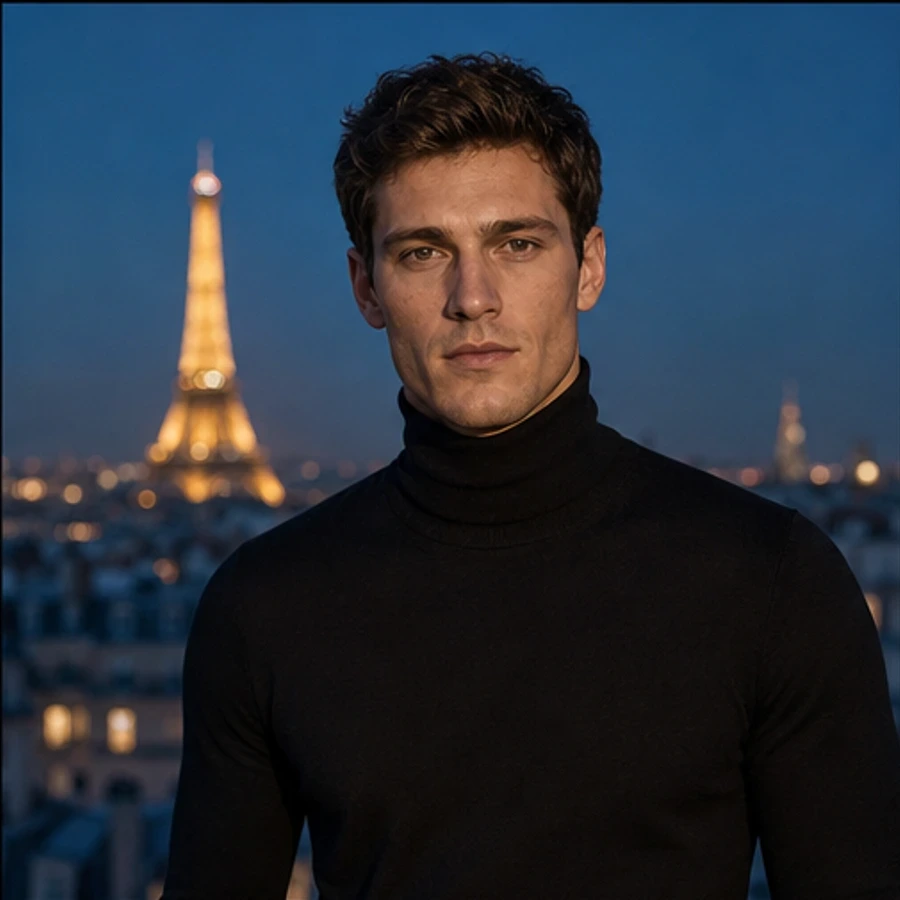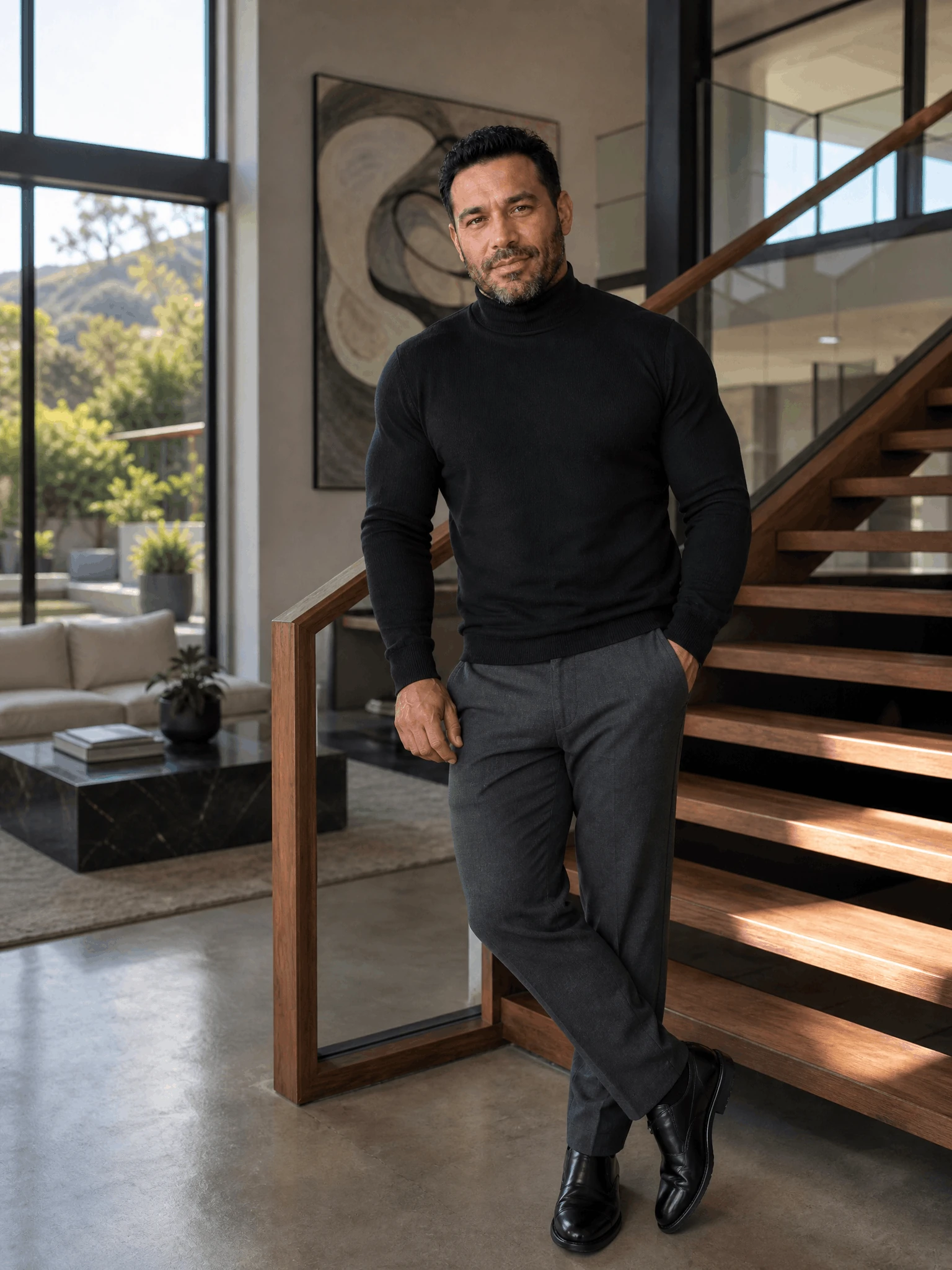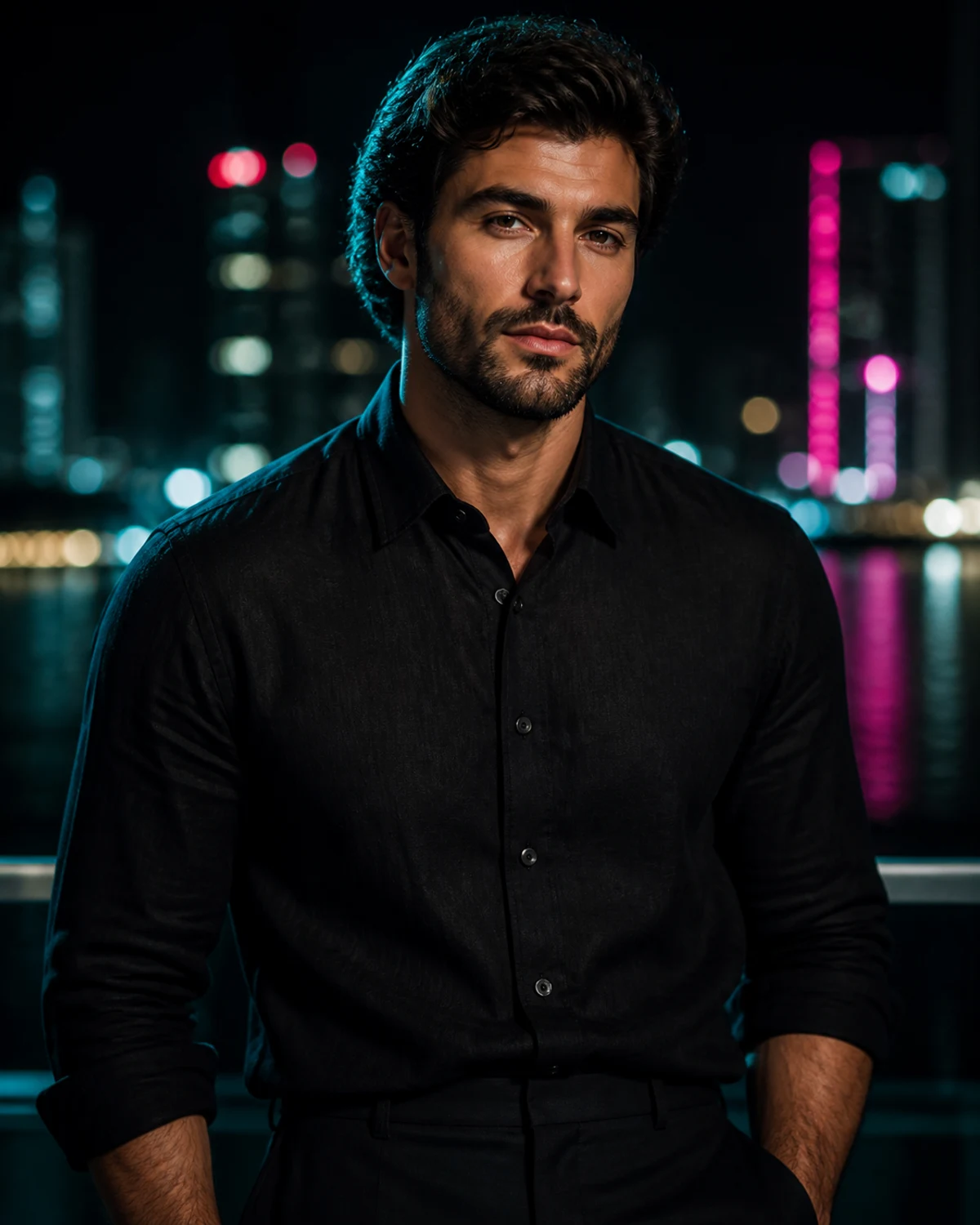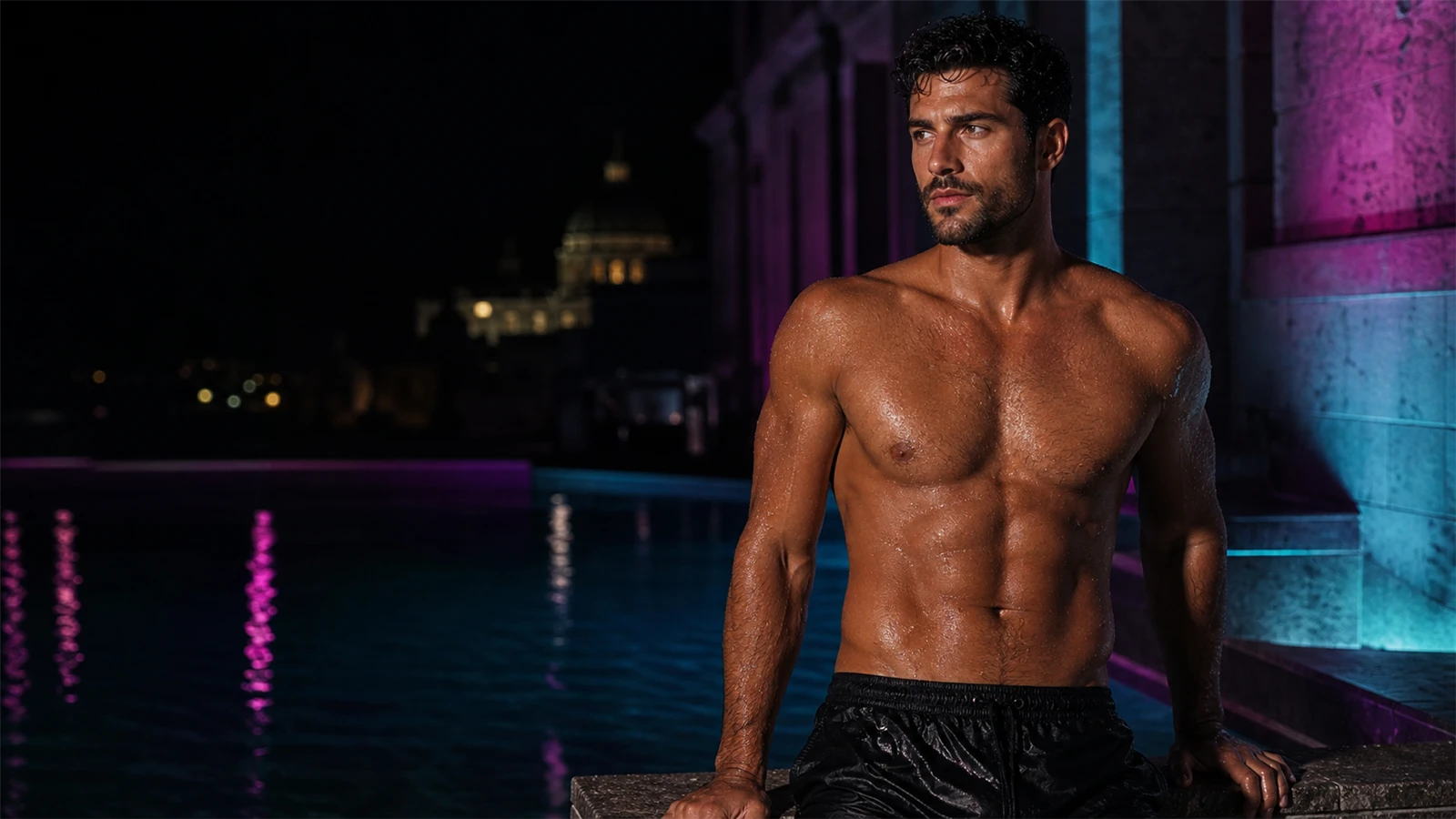
The most persuasive summer images do not need to announce themselves. They arrive in the small interval after the heat has softened, when the water has gone dark at the edges and a hotel terrace begins to feel like a private stage. In Luca Moretti’s latest ViceHeaven Original, that interval is the entire point. The setting is spare: tiled ground, reflected blue, a low wall, a distant line of city light. What gives the series its charge is not spectacle but control. Luca is photographed as a fictional adult character in a composed moment, present without performing for the frame.
The edit moves between broad architectural views and closer fragments of fabric, wet hair and sun-warmed skin. Each image makes room for the atmosphere around him. A pool can be a loud visual shorthand, but here it becomes a source of texture: ripples break the hard geometry of the setting, and the late light turns the surrounding surfaces from white to silver to deep violet. The result sits closer to a fashion story than a pose-driven gallery. It has the clean pacing of a short film paused at exactly the right frames.
Moretti’s imagined persona is intentionally light on biography. ViceHeaven Originals are editorial characters, not claims about real people, and the series treats that boundary as part of its appeal. His presence is built through gesture rather than invented facts: a hand against the tile, a glance beyond the lens, a shirt left loose at the shoulder as the evening air arrives. The styling follows the same rule. Nothing competes with the location, and nothing asks the viewer to confuse a mood with a life story.
That restraint leaves the pictures with room to breathe. Instead of presenting summer as a rush of activity, the story holds on the pause after it. It is a study in how a single location can shift when the light changes, and how masculine portraiture can be sensual without becoming explicit. The complete ViceHeaven Original expands on this visual sequence with the full set, but the public edit already makes its case: the last hour of daylight is enough when every detail has been given time to land.