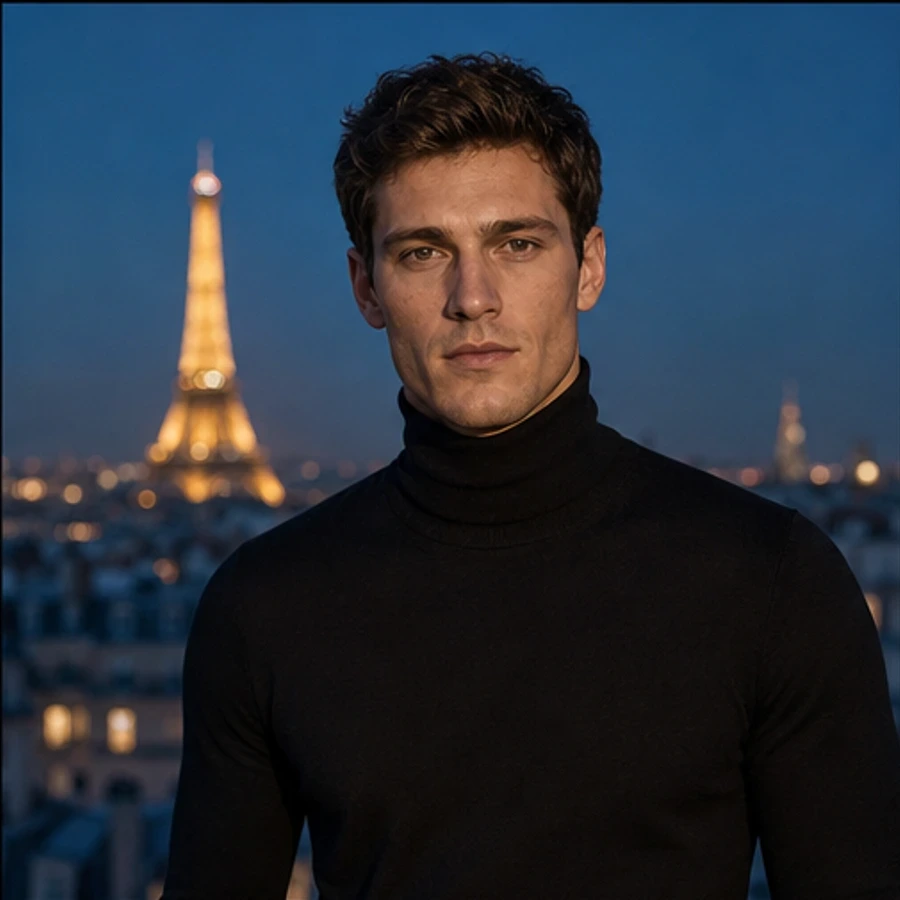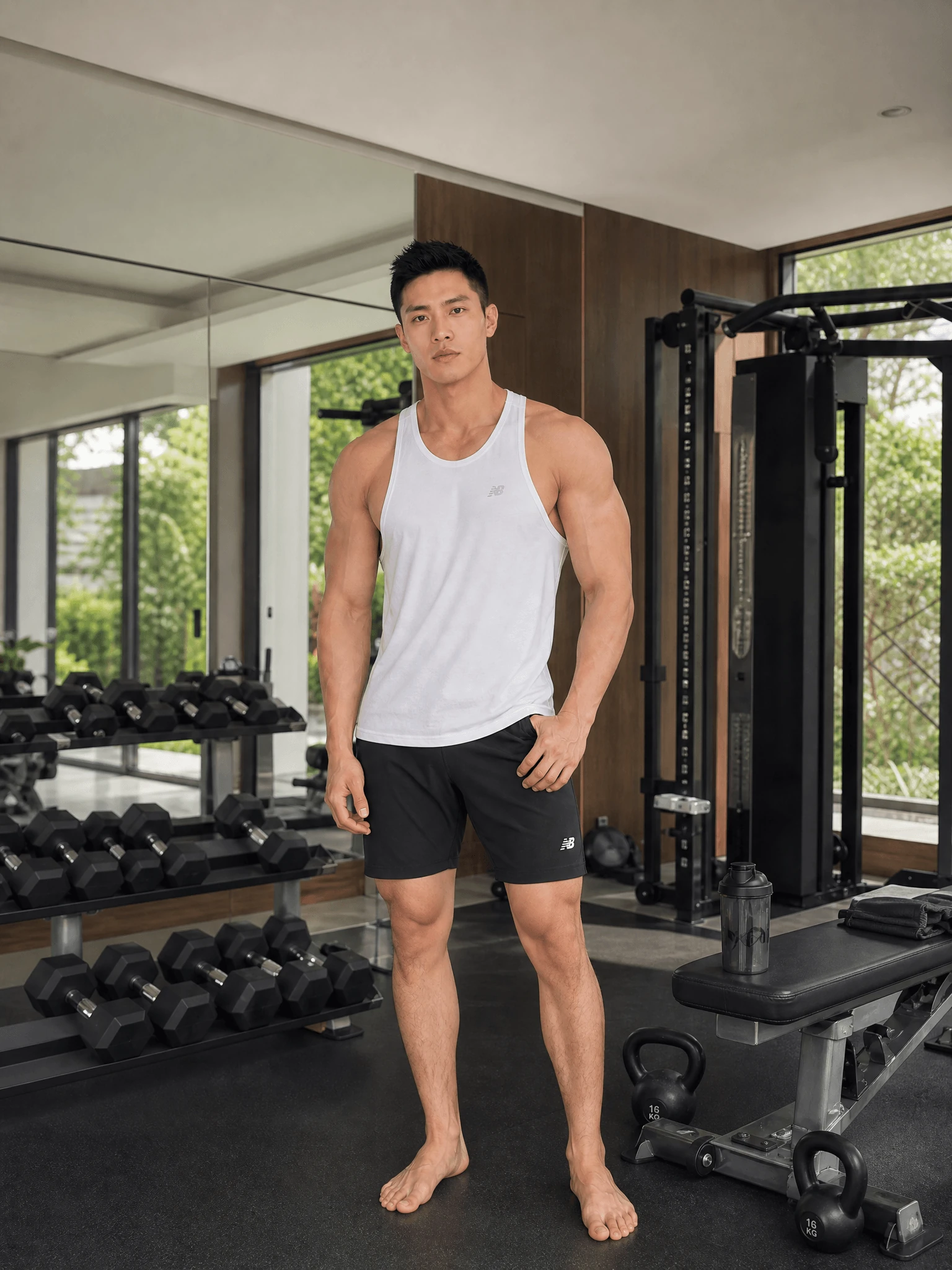
Beau Carter enters this ViceHeaven story through sunlit water and a quiet terrace, not through an invented biography. The character is a fictional adult created for an editorial series, and the pictures make that distinction clear. What matters here is the visual situation: the relation between a figure, a room and the light that keeps changing around him. The opening frames move slowly, allowing texture to do as much work as expression. A sleeve catches a reflection, a doorway divides the room, and the camera stays long enough for the small decisions in the styling to become part of the atmosphere.
The series treats masculine style as a way of composing a scene rather than a catalogue of things to buy. Fabrics sit against concrete, glass or weathered wood; the color palette stays restrained so a single deep tone can register with more force. Beau Carter is never asked to perform a private life for the viewer. Instead, gesture becomes the language: a pause at a window, a hand resting against a wall, a look directed just beyond the frame. The approach keeps the work sensual and cinematic while remaining non-explicit and editorial in purpose.
There is an advantage to working with a character instead of a claim. The story can stay focused on image, rhythm and place without pretending that a photograph reveals facts about a real person. That lets this release move between close portraiture and wider environmental shots with more freedom. The setting carries equal weight with the subject, giving the sequence a sense of movement even when almost nothing is happening. Each frame is designed to feel connected to the next, as though a short film had been reduced to its most persuasive stills.
By the final images, the visual argument is deliberately quiet. Beau Carter remains a fictional adult ViceHeaven Original, but the mood lingers beyond the label: composed, intimate and precise. The public story offers the first chapter of the release, while the related photo sets and Original series extend the same world through a fuller sequence of images. It is an invitation to browse rather than a demand for attention, built for readers who prefer atmosphere, detail and a strong next frame over noise.